The AI logo generator vs designer choice comes down to budget and timeline, business stage and ownership. An AI logo generator gives you a logo in minutes from a few inputs. A professional logo designer builds an original mark from brand strategy and research.
The core difference is pattern versus craft. AI recombines existing shapes, fonts and icons, while a designer creates a mark for your positioning. The process differs too, since AI skips discovery and a designer moves through research, concepts and refinement.
Cost and speed favor AI. Most AI tools charge under $100 for files, while custom work can reach tens of thousands. AI delivers in minutes, and a designer usually needs one to three weeks.
Quality and ownership favor the designer. You get vector source files and a trademark-eligible logo. Purely AI output lacks the human authorship US copyright requires.
AI is also reshaping the industry, taking over simple tasks while brand identity stays human-led. Use AI for early ideas and tight budgets. Hire a designer for a lasting brand identity system, or combine both.
What Is the Difference Between an AI Logo Generator and a Professional Logo Designer?
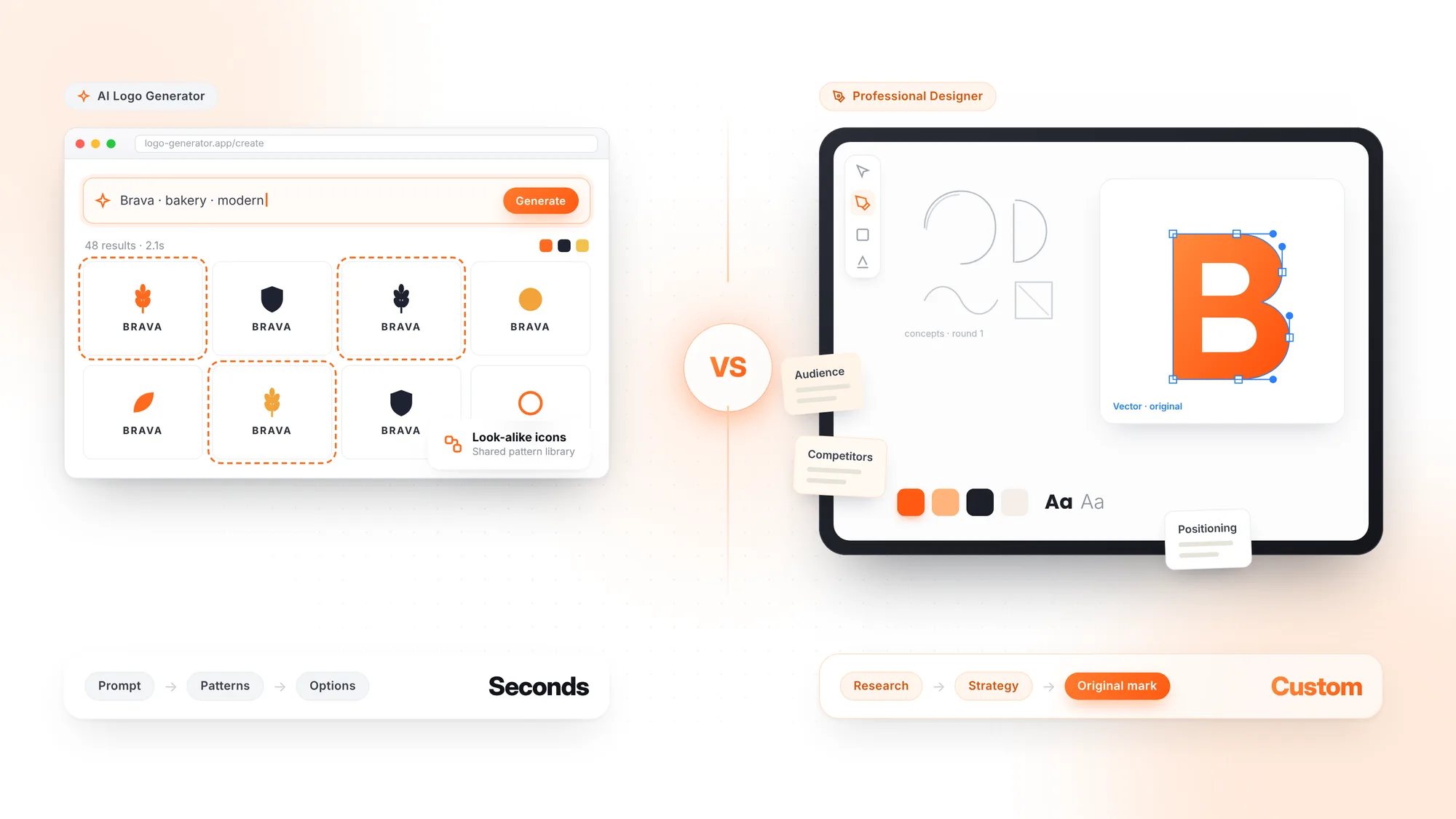
An AI logo generator is an online software tool that creates logos automatically from a text prompt. You enter your business name and industry, and the tool returns dozens of options generated in seconds.
A professional logo designer is a graphic design specialist who creates custom logos through research and client collaboration. The designer studies your brand positioning, audience and competitors before drawing anything.
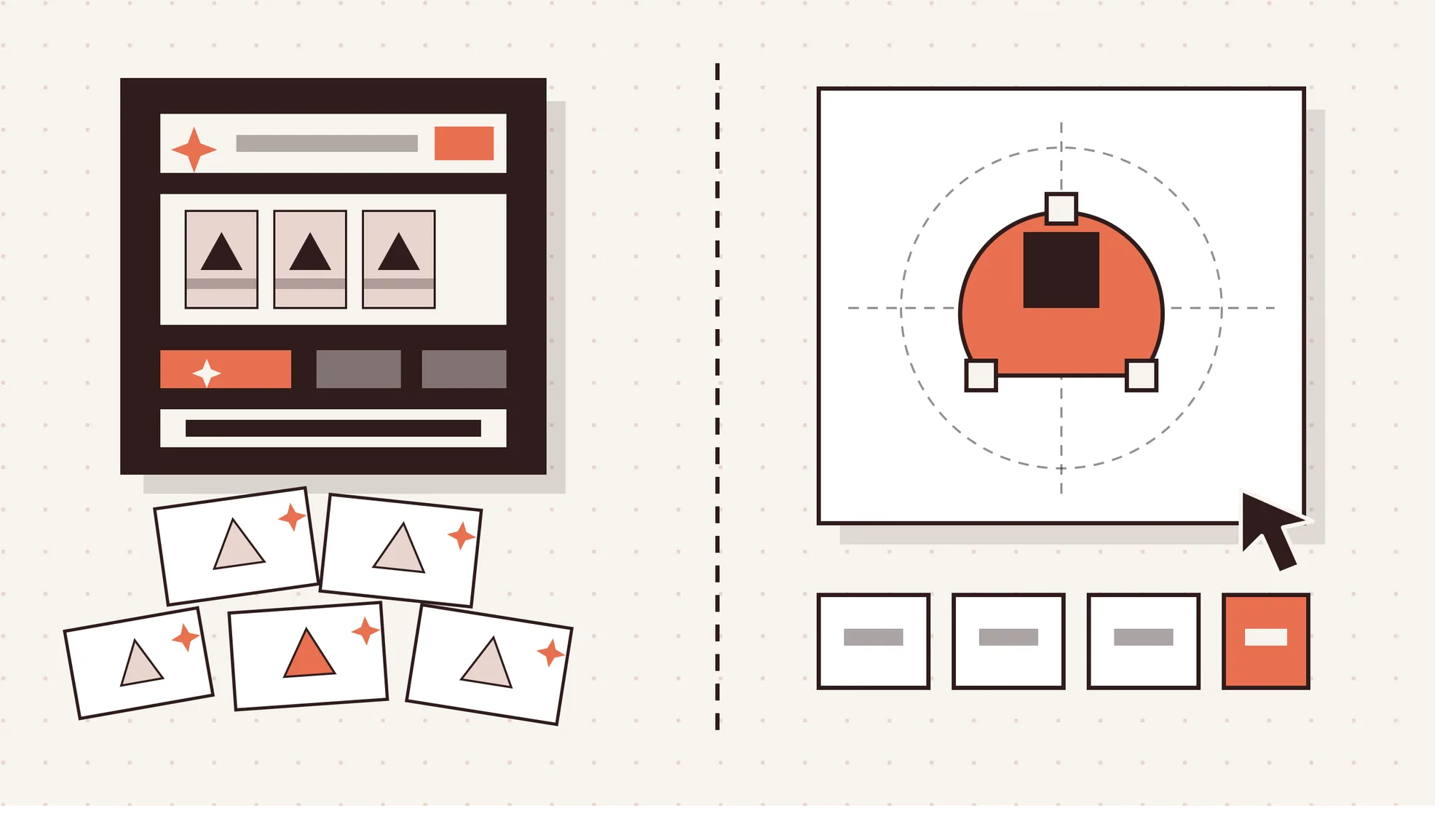
The key difference is how the logo gets made. An AI tool assembles output from existing patterns, while a designer builds an original mark from strategy. That's why AI logos often share symbols and fonts with other brands.
How Does the Logo Design Process Differ Between AI and a Designer?
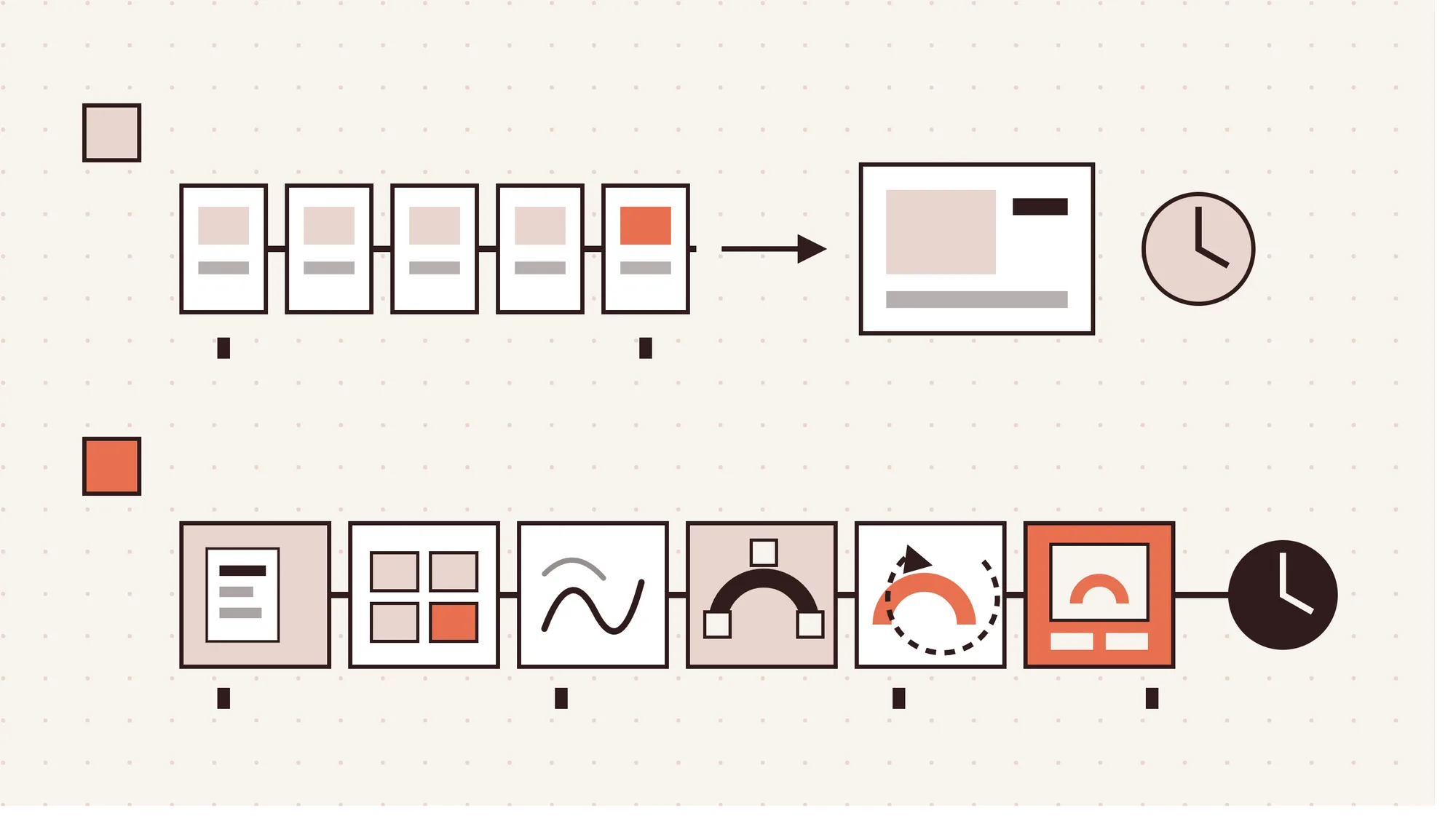
The logo design process differs mainly in depth. An AI tool turns your inputs into instant options. A designer moves through discovery, concept sketching, feedback rounds and final delivery.
Both processes are broken down step by step below.
How Does an AI Logo Generator Work?
An AI logo generator works by matching your business details to design patterns it has learned or stored. It then combines icons, fonts and colors into ready-made options you can edit and download.
5 steps of how an AI logo generator works are given below.
- Enter the business name and industry. The tool uses your name and sector to pull relevant symbols. A bakery might see wheat icons, and a fintech brand might see shields.
- Describe the brand style or write a text prompt. You pick words like modern or playful, or type a short prompt. Generative AI tools read that brand personality and adjust.
- Pick preferred colors, fonts and icons. You choose a color palette, a font pairing and icon types. These choices narrow the pool the generator draws from.
- Generate and browse logo options. The tool produces dozens of logo options in seconds. You save favorites and preview them on mockups like business cards.
- Customize and download a logo package. You adjust spacing, colors and layout in the editor. Then you pay for the download package, which may hold only PNG files. Many tools recombine elements from shared icon and font libraries. That's why look-alike marks appear across unrelated businesses.
What Is the Professional Logo Design Process?
The professional logo design process is a structured path from research to final files. Each stage builds on the last, so the mark fits your brand, not a template.
6 stages of the professional logo design process are outlined below.
- Brand discovery and positioning. The designer runs client discovery through a questionnaire or workshop. You cover your mission, values and market position. That input becomes the design brief.
- Competitor and audience research. The designer maps the competitive landscape and studies your target audience. The goal is to find visual space you can own and avoid industry clichés.
- Concept sketching. The designer sketches many rough ideas on paper or screen. The strongest two or three directions move forward, each tied to the strategy from discovery.
- Vector creation. The chosen concepts become clean vector artwork in tools like Adobe Illustrator or Figma. Vectors scale to any size without losing sharpness.
- Feedback and refinement. You review the concepts and share feedback. Most projects include set revision rounds to adjust shapes, spacing, color and type until the mark feels right.
- Final file delivery and brand guidelines. You receive the full file set in every format and color mode. Many designers add a brand guidelines document covering colors, typography and usage rules. Our professional logo design work at Panze follows a similar path. Our designers move through discovery and positioning, concept development, refinement and identity expansion, and then delivery and handoff.
How Much Does an AI Logo Generator Cost Compared to a Professional Logo Designer?
An AI logo generator costs far less than a professional logo designer. Most AI file packages cost under $100. Custom design runs from about $25 on marketplaces to $50,000 or more at agencies.
Most AI logo makers are free to preview and charge only when you download the files. Looka's Basic package, for example, costs $35 one-time for PNG files only. The $72 Premium package adds vector files like SVG and EPS.
Subscriptions cost more over time. Looka's Brand Kit is $96 a year, and Brand Kit Web is $129 a year.
Professional pricing depends on who you hire. Marketplace freelancers charge about $25 to $300, and mid-level freelancers charge $300 to $2,500. Boutique studios charge $2,500 to $10,000, and branding agencies $10,000 to $50,000 or more.
Five factors drive logo design cost: provider type, experience, scope, concepts and revisions, and brand guidelines. A logo-only project costs far less than a full brand identity.
The cost of an AI logo generator vs a professional logo designer is shown in the table below.
| Option | Typical price | What you get | Best for |
|---|---|---|---|
| AI logo generator | Free to preview, about $35 to $130 for files | Template-based logo, PNG on basic tiers, vector files on paid tiers | Placeholders, MVPs and side projects |
| Design marketplace freelancer | $25 to $300 | Simple wordmark or icon with limited revisions | Tight budgets and simple needs |
| Mid-level freelancer | $300 to $2,500 | Custom logo, a few concepts and vector files | Most small businesses |
| Boutique studio | $2,500 to $10,000 | Strategy-led logo, variations and basic guidelines | Growing brands |
| Branding agency | $10,000 to $50,000+ | Research, full brand identity system and guidelines | Established companies and rebrands |
Prices change often. In September 2026, Looka raised Basic from $20 to $35 and Premium from $65 to $72. Check each tool's pricing page before you buy.
For reference, Panze's fixed-price design plans start at $500.
How Long Does It Take to Get a Logo From AI vs a Designer?
An AI logo generator gives you a logo in minutes, while a designer usually needs days to weeks. Most AI tools return usable options in under 15 minutes, including the time you spend editing.
A custom logo project typically takes one to three weeks. Larger scopes, such as a full brand identity, can run longer.
The designer's turnaround time grows with each stage. Discovery and research fill the first days, then concept rounds, feedback cycles and file preparation add the rest.
Slow feedback on your side can stretch the timeline further. So plan backward from your launch deadline.
Which Delivers Better Logo Quality and Originality?
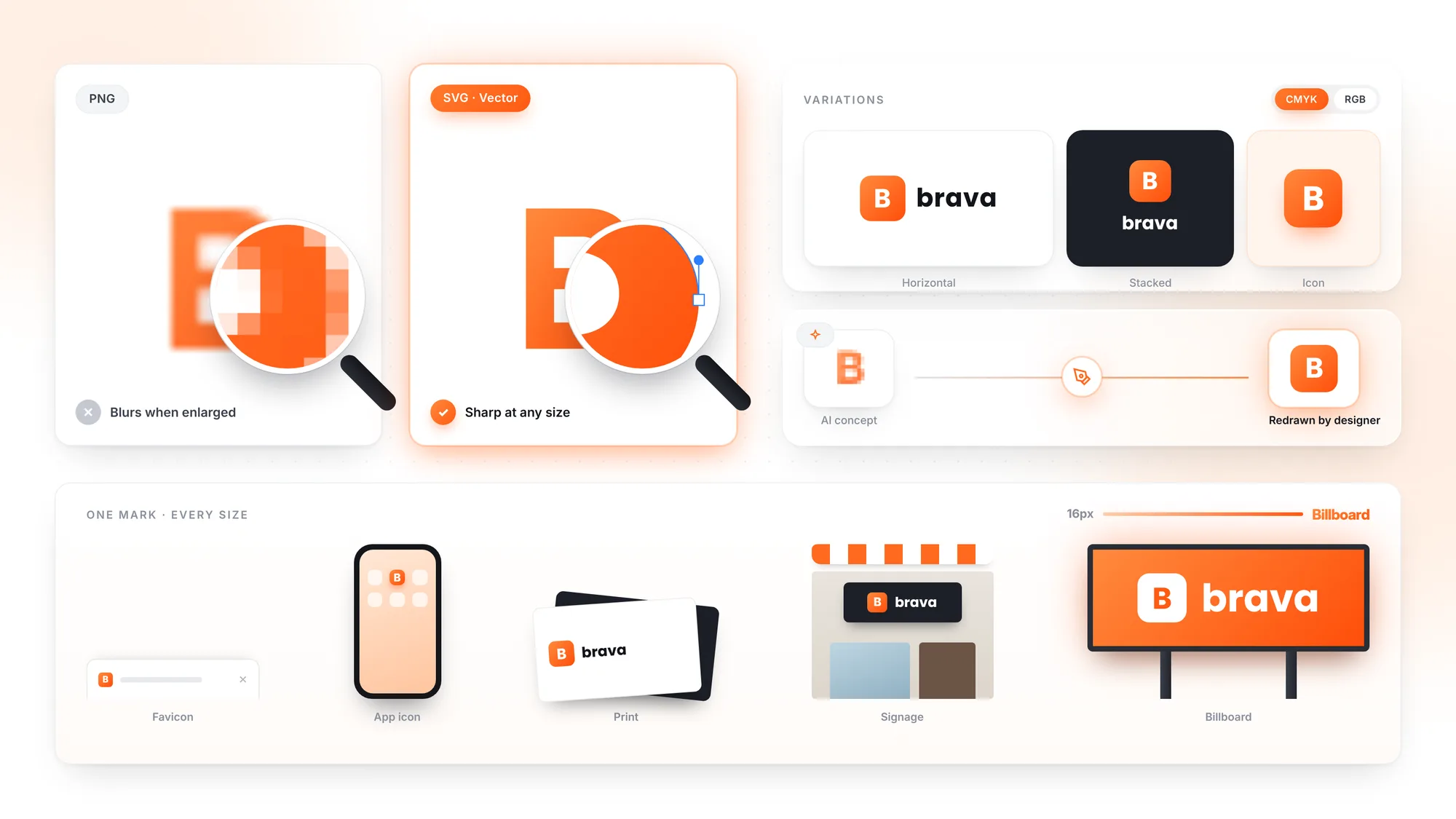
A professional logo designer delivers better logo quality and originality in most cases. AI tools are fast, but their output tends to be generic.
AI logos look generic for two main reasons. Many tools pull from shared templates and a shared icon pool. Generative models are also trained on existing designs, so they repeat familiar patterns instead of new ideas.
File quality is another gap. Cheap tiers often export raster files like PNG, which blur when you enlarge them. You may also get limited variations, and some AI vector exports have messy paths that printers struggle with.
A designer builds the mark to scale from a 16px favicon to a billboard. You get horizontal and stacked lockups, an icon-only version, and CMYK and RGB color modes. The result is a set of print-ready files and a distinctive mark that holds up everywhere.
AI quality does improve when a human refines the output. A designer can redraw an AI concept as true vector artwork and make it original.
Who Owns an AI-Generated Logo?
Who owns an AI-generated logo depends on the platform's license terms and on copyright law. In most cases you get usage rights, but you may not hold a copyright.
The platform's license terms decide your commercial use rights. Some tools grant broad rights, while others keep certain rights or offer non-exclusive licenses. So read the terms before you pay.
Copyright adds a second limit. In the US, purely AI-generated images can't be registered for copyright, because copyright requires human authorship. The US Copyright Office confirmed this in Part 2 of its AI report in January 2025.
The courts have backed that position. On March 2, 2026, the Supreme Court declined to review Thaler v. Perlmutter. That left the human authorship requirement in place.
Human selection, arrangement or modification of AI output may still be protectable, but prompting alone usually is not. A case testing detailed prompting, Allen v. Perlmutter, is still pending as of November 2026.
A designer-made logo works differently. A written work-for-hire or copyright transfer contract can pass full copyright to your business. If you use AI at any stage, document your human contributions.
This section is general information, not legal advice.
Can You Trademark an AI-Generated Logo?
Yes, you can trademark an AI-generated logo because trademark law judges the mark, not its maker. The test is whether the logo identifies the source of your goods or services in commerce. So an AI-made mark can qualify, even without copyright protection.
The USPTO has three core requirements. You need use in commerce or a bona fide intent to use. The mark must also be distinctive, with no likelihood of confusion with an earlier mark.
AI logos carry extra risk, because the output may resemble existing marks. Infringement doesn't require intent, so an accidental look-alike still counts. Run a full clearance search with visual design searches, then file and keep records of every edit.
How Is AI Changing the Logo Design Industry?
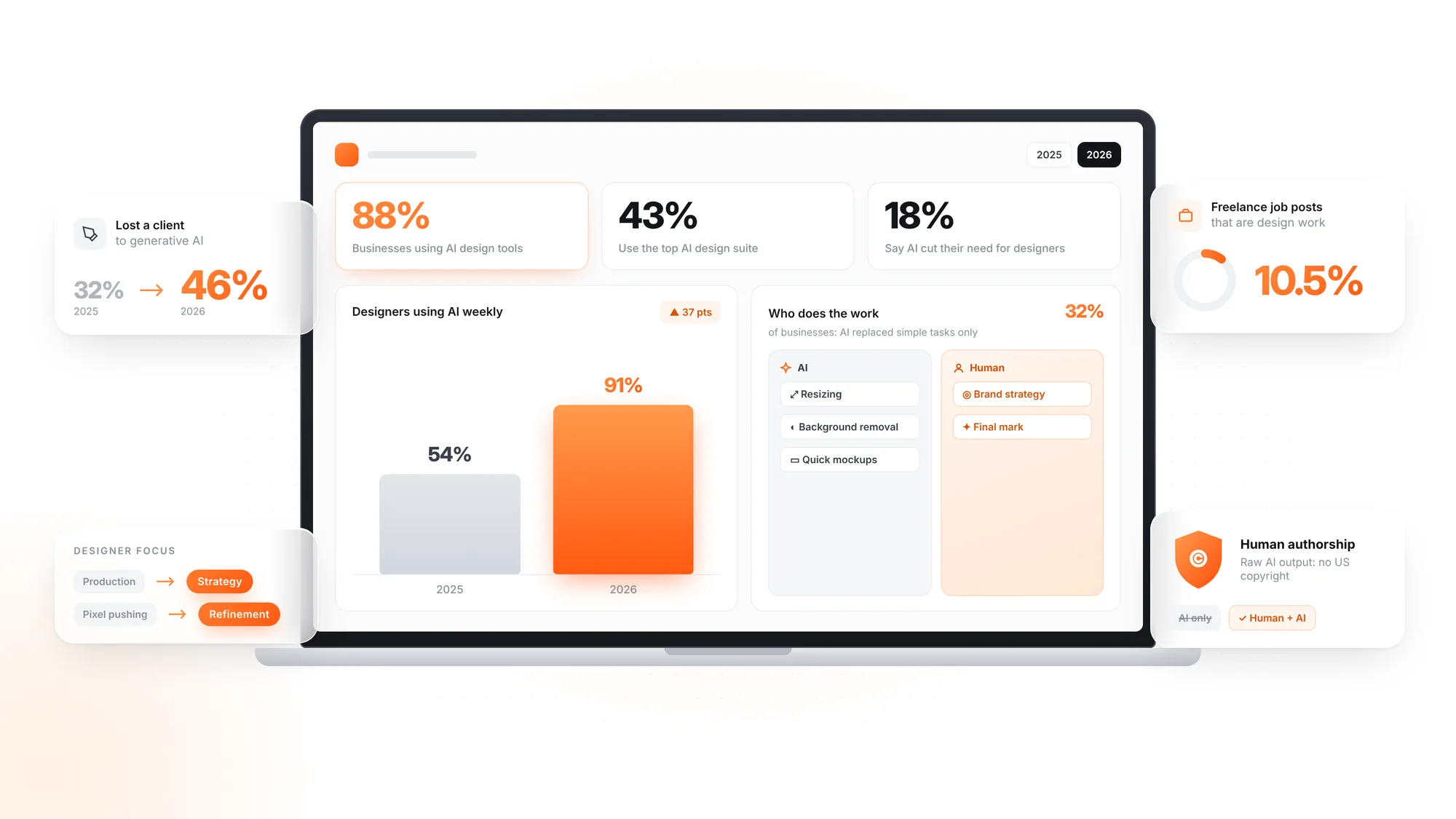
AI is changing the logo design industry by taking over simple production work. Brand strategy stays with people, and demand for designers has held up.
6 ways AI is changing the logo design industry are given below.
- Businesses have adopted AI design tools. Clutch's 2026 graphic design industry survey found that 88% of businesses use AI design tools. Canva's Magic Studio is the most used, at 43%. Yet only 18% say AI has reduced their need for designers.
- Designers now use AI almost every week. The AI in Design Report 2026 surveyed 906 designers. Weekly AI use rose from 54% in 2025 to 91% in 2026. AI has become a routine part of most design workflows.
- AI handles production while brand identity stays human-led. In the same Clutch survey, 32% of businesses said AI replaced only simple design tasks. Resizing, background removal and quick mockups move to AI. Strategy and the final mark stay with people.
- Some creatives are losing commissions. In a 2026 Association of Illustrators survey, 46% of respondents knew a client chose generative AI over them. A year earlier, that figure was 32%. Low-budget, simple jobs feel this first.
- Freelance design demand continues. November 2026 research from OpenAI and Upwork looked at freelance job posts. Graphic, editorial and presentation design made up 10.5% of Upwork posts. The authors call freelance demand for graphic design still substantial.
- Legal clarity on AI authorship has arrived. With the human authorship rule now settled, brands know raw AI output can't be copyrighted in the US. That gives companies a clear reason to keep a human involved in any mark they plan to protect. AI isn't removing the need for designers. It's shifting their work toward strategy and refinement.
Our roundup of graphic design trends shaped by AI shows how these shifts look in practice.
When Should You Use an AI Logo Generator?
You should use an AI logo generator when speed and cost matter more than originality. It suits short-term needs and early ideas you plan to replace.
The situations where an AI logo generator makes sense are given below.
- Validating an early-stage business idea or MVP. You need a placeholder logo for a landing page, pitch or proof of concept. AI gives you something presentable today, and the real brand can come later.
- Side projects, internal tools and short-lived campaigns. A weekend project or a one-off event rarely needs a trademark. A quick AI logo is enough when the audience is small and the lifespan short.
- Very tight budgets with an immediate launch date. Some early-stage startups have no design budget and a launch next week. An AI logo covers the gap until revenue lets you hire a designer.
- Brainstorming visual directions before a designer brief. AI is useful for quick mockups of styles, colors and symbols. Bring those to a designer, and your first meeting starts with clearer direction.
When Should You Hire a Professional Logo Designer?
You should hire a professional logo designer when your logo needs to last, scale and be legally yours. That usually applies to established businesses and brands planning to grow.
The situations where hiring a professional logo designer pays off are given below.
- Building a long-term brand you plan to trademark. A trademark-eligible logo has to be distinctive and clear of conflicts. A designer creates an original mark that supports your trademark search.
- Raising investment or competing on trust. Investors and buyers judge credibility fast. A generic mark can make a serious company look temporary, while an investor-ready brand shows clear positioning.
- Rebranding or scaling into new markets. A rebrand has to carry existing recognition into a new look. New markets also raise cultural fit and local trademark questions that AI can't judge.
- Needing a full brand identity system with guidelines. That system covers logo variations, a color palette, typography and usage rules. It helps every team and vendor apply your brand the same way.
- Printing on packaging, signage, merchandise or vehicle wraps. Physical media need scalable vector files, exact color specs and CMYK versions. A designer prepares these files so every print comes out sharp and consistent.
How to Combine an AI Logo Generator With a Professional Logo Designer?
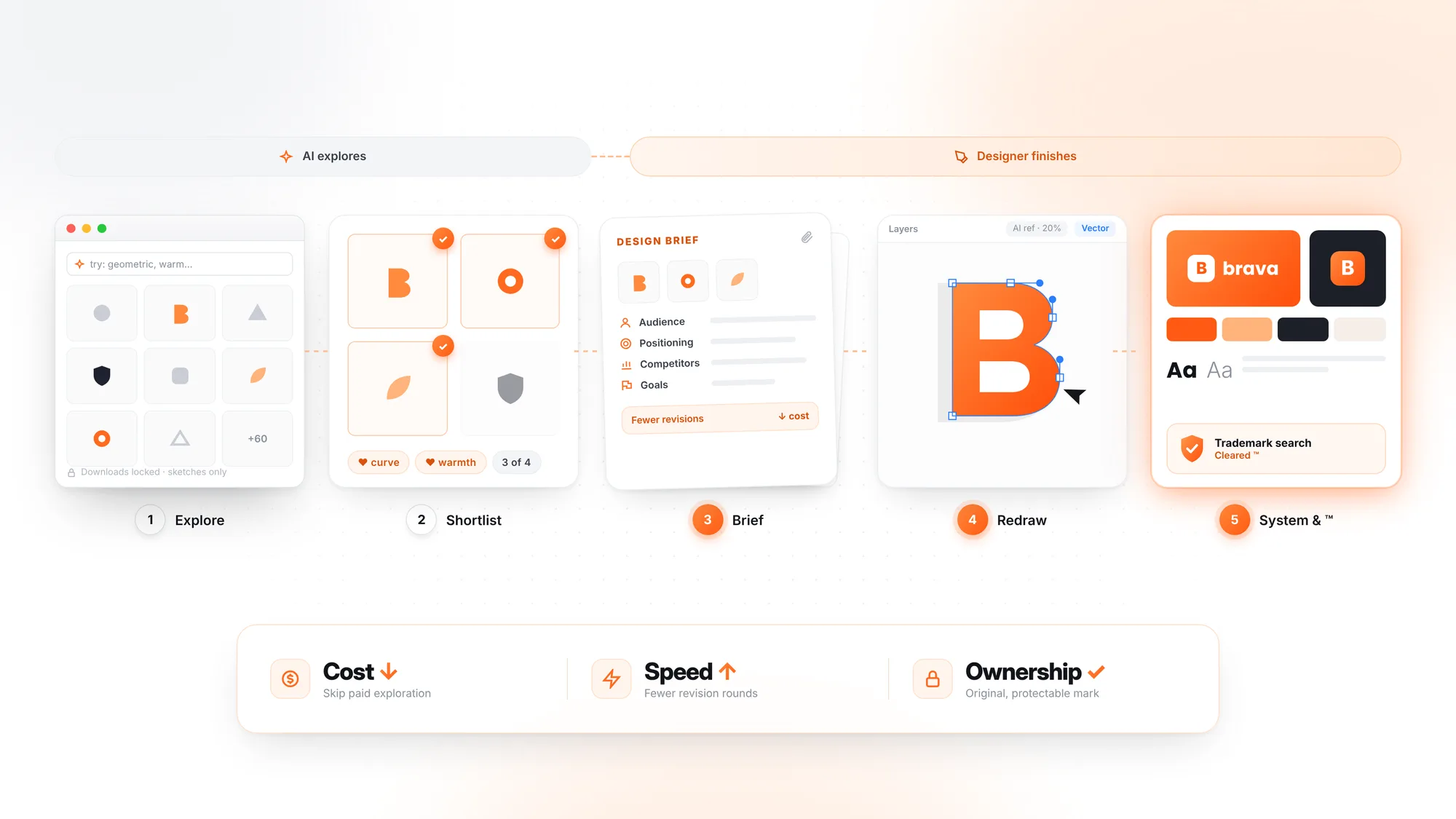
To combine an AI logo generator with a professional logo designer, let AI explore and the designer finish. AI handles rough visual directions, and the designer delivers the original mark, files and brand system.
5 steps to combine an AI logo generator with a professional logo designer are outlined below.
- Generate rough concepts with an AI tool. Spend an hour testing styles, symbols and colors. Treat everything as sketches, and don't pay for downloads yet.
- Shortlist 3 or 4 strong directions. Pick the options that best match your brand personality. Note what you like about each, such as a shape or a font style.
- Brief a designer with the shortlist and brand goals. Share the shortlist with your audience, positioning and competitors. A clear designer brief cuts revision rounds and keeps costs down.
- Let the designer redraw the mark as original vector artwork. The designer uses the AI concepts as reference only. Redrawing from scratch makes the mark original and gives you clean vector files.
- Build the brand system and clear the trademark. The designer adds logo variations, colors, typography and usage rules. Then you run a trademark clearance search before you file and launch. This hybrid approach balances cost, speed and ownership, because you skip expensive exploration and still own the result.
Is a Professional Logo Designer Worth the Cost?
Yes, a professional logo designer is worth the cost because your logo appears on every touchpoint for years. It sits on your website, product, packaging and ads.
Fixing a weak or infringing logo later means redoing all of those assets. That costs far more than doing it right once.
The answer still depends on your business stage. An idea you're still testing may not need a designer yet.
What Are the Hidden Costs of a Cheap AI Logo?
A cheap AI logo often costs more over time once you add file upgrades, redraws and legal risk.
The hidden costs of a cheap AI logo are given below.
- Paying again for vector or high-resolution files. Basic tiers often export PNG only, so print or large formats mean paying for an upgrade.
- Redrawing the logo for print and merchandise. Raster or messy exports often need a designer to rebuild them before printers can use them.
- Trademark conflicts or rejected applications. A look-alike mark can lead to a rejected USPTO application or a dispute with an earlier brand owner.
- Rebranding once the business outgrows the logo. A generic logo rarely grows with you. A later rebrand means replacing every asset that carries it.
Do Professional Logo Designers Use AI?
Yes, professional logo designers do use AI because it speeds up the early, repetitive parts of the job. The jump to 91% weekly AI use among designers, noted above, reflects how common this has become.
Designers use AI for moodboards, rapid concept exploration, mockups and vectorizing sketches. Strategy, the final mark and the brand system stay under human creative control. At Panze, our AI-assisted design and development works this way, with senior designers reviewing everything.
Will AI Replace Professional Logo Designers?
No, AI will not replace professional logo designers because businesses still hire for judgment and creativity. The Clutch data above shows fewer than one in five businesses say AI cut their need for designers.
Creativity is also the top trait businesses hire for, named by 39% in the same Clutch survey. AI can produce options, but it can't decide which idea fits a brand's strategy.
Low-end logo jobs are the most exposed. Quick wordmarks for tiny budgets are exactly what AI tools now handle. Work that needs strategic thinking and human judgment stays in demand.
What Are the Pros and Cons of AI Logo Generators and Professional Logo Designers?
Each option trades cost and speed against originality and ownership. AI wins on price and turnaround, while a designer wins on strategy and ownership confidence. Both are broken down in the tables below.
What Are the Pros and Cons of AI Logo Generators?
The pros and cons of AI logo generators are given in the table below.
| Pros | Cons |
|---|---|
| Low cost, and often free to preview | Generic or look-alike output |
| Logo options in minutes | Limited customization beyond the editor |
| Available 24/7 with no scheduling | Raster-only files on cheap tiers |
| Easy to use without design skills | No brand strategy or brand system |
| Quick way to test many directions | Unclear ownership and trademark risk |
What Are the Pros and Cons of Hiring a Professional Logo Designer?
The pros and cons of hiring a professional logo designer are given in the table below.
| Pros | Cons |
|---|---|
| Original design built for your brand | Higher upfront cost |
| Brand strategy and audience research | Longer turnaround, often several weeks |
| Full vector file set and lockups | Time spent finding the right designer |
| Brand guidelines for consistent use | Revision limits in most contracts |
| Clear ownership through copyright transfer | Quality varies from one designer to another |
How Do AI Logo Generators Compare to Other Logo Design Options?
AI tools and individual designers aren't your only logo design options. Template makers, branding agencies and design subscriptions each fit different needs, as the comparisons below show.
What Is the Difference Between an AI Logo Generator and a Logo Template Maker?
An AI logo generator creates new combinations from your inputs. A logo template maker, like Canva templates, lets you edit a fixed, pre-made design in a drag-and-drop editor. You change the text, colors and icon, but the structure stays the same.
Both share the same originality limits. Other businesses can pick the same template or combination. Neither gives you a mark that's easy to protect.
What Is the Difference Between a Freelance Logo Designer and a Branding Agency?
A freelance logo designer works alone and usually delivers the logo itself. A branding agency uses a team to add brand strategy, research and a full identity system.
Price follows the scope of work. Freelancers often charge $200 to $800 for a logo, or $25 to $150 per hour. Agencies sit at the top of the cost table above.
Choose a freelancer for a logo-only project, and an agency when many teams will use the brand system.
What Is the Difference Between a Design Subscription and a Freelance Logo Designer?
A design subscription charges a flat monthly fee for ongoing requests. A freelance logo designer charges a one-off project fee instead. Subscriptions suit ongoing design needs, like social graphics, ads and presentations.
A freelancer suits a single logo project with a clear end date. You can compare the leading design subscription services in our separate guide.
Final Thoughts
The right choice depends on your stage. An AI logo generator suits fast, low-budget, early-stage needs like an MVP. A professional logo designer suits businesses building a lasting, ownable brand.
In the AI logo generator vs designer decision, the hybrid approach often gives the best value. Use AI to explore, then let a designer turn the best idea into an original mark.
Ready for a logo you can grow with? Talk to our team about logo and branding design. Agencies can also bring Panze in to deliver branding under their own name.
You can also browse our past design work to see how we approach brand identity.
Frequently Asked Questions
Here are quick answers to common questions about AI logos.
Are AI-Generated Logos Unique?
No, AI-generated logos are not always unique because the tools draw on shared libraries and training data. Two different business types can enter similar inputs and get nearly identical marks. Run a reverse image search and a trademark search before you commit to one.
Do AI Logo Generators Provide Vector Files?
No, AI logo generators do not always provide vector files because most tools lock them behind paid tiers. Basic tiers, like Looka's Basic package, often give you a transparent PNG only.
Vector formats like SVG, EPS and PDF sit on higher tiers. Without them, your logo blurs when scaled up.
Is a Logo the Same as a Brand Identity?
No, a logo is not the same as a brand identity because a logo is a single mark. A brand identity is the connected system around it. That system includes your color palette, typography, logo variations and usage rules, usually recorded in brand guidelines.
Are AI Logo Generators Good?
Yes, AI logo generators are good for quick, low-cost placeholder logos because they deliver usable options in minutes. They work well for MVPs, side projects and early brainstorming. But they fall short on originality, file quality and ownership. That makes them a weak fit for a long-term brand.
What File Formats Should a Logo Come In?
A logo should come in vector formats like SVG, EPS or AI, plus PNG and PDF exports. Vector files scale for print and signage without losing sharpness. A complete set also includes transparent, reversed and single-color versions. Each should come in CMYK for print and RGB for screens.
Can a Designer Refine an AI-Generated Logo?
Yes, a designer can refine an AI-generated logo by redrawing it as clean vector artwork. The designer fixes spacing, balance and typography, then builds the variations you need. A proper redraw also adds human authorship, which makes the final mark easier to protect and more distinctive.
What Is the Minimum Budget for a Custom Logo?
The minimum budget for a custom logo is usually around $300 for a mid-level freelancer. Marketplace designers charge less, but you often get a simple wordmark with limited revisions. For a strategy-led logo with variations and guidelines, plan for $2,500 or more at a boutique studio.