The right questions to ask a design agency show who does the work and what you'll own. Ask them before hiring a UI/UX design agency, while walking away still costs nothing.
This guide gives you 25 questions in seven groups. You'll start with the agency's experience and portfolio, then the team that does the work. Next come the design process and discovery, followed by how the agency uses AI and handles AI governance.
After that, you'll cover pricing, scope and timelines, then ownership, source files and handoff. The last group covers business results and post-launch support. Finally, you'll learn to score shortlisted agencies and spot red flags before you sign.
What Questions Should You Ask a Design Agency Before Hiring?
Vetting questions are what you ask a shortlisted agency before signing, to check fit, process, cost and ownership. Kickoff questions are different. The agency asks those once the project starts.
Good vetting questions test five areas. They show who does the work, how the work gets done and what it costs. They also reveal what you own and what happens when things go wrong.
Why Do the Right Questions Matter When Hiring a UI/UX Design Agency?
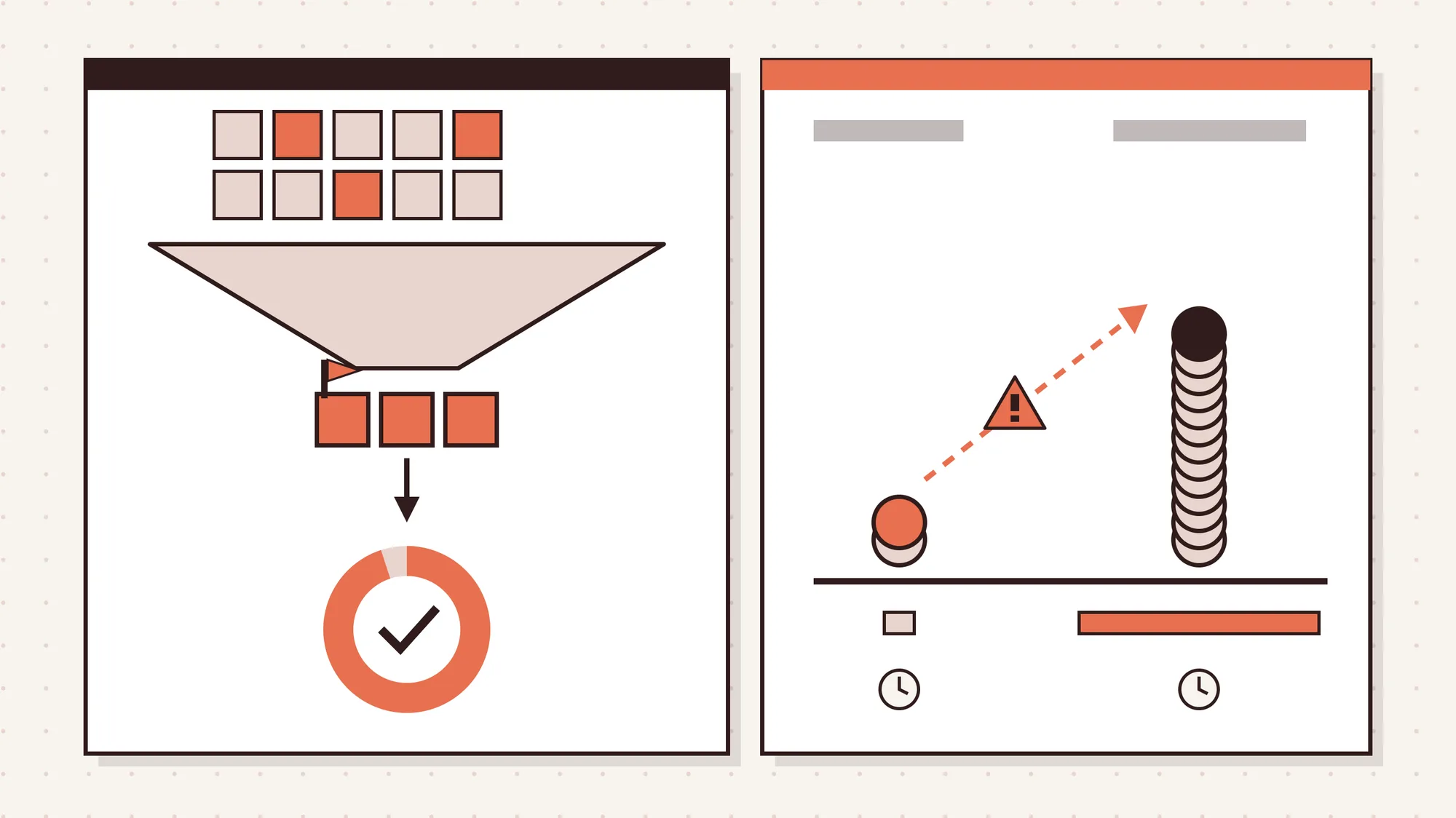
The right questions matter because buyers decide early and pay for weak decisions later. 6sense studied about 10,000 B2B buyers. Buying groups chose a vendor from their day-one shortlist 95% of the time.
The questions also need to go deeper than visuals. Nielsen Norman Group's State of UX 2026 says AI and standard design systems made polished screens cheaper. Research, strategy and judgment now separate a strategic partner from a surface-level one.
Weak vetting gets expensive fast. At TinyPilot, a design estimate of four weeks and $7k grew to $46k over eight months.
What Should You Prepare Before Contacting a Design Agency?
Before contacting a design agency, prepare a short design brief that answers the agency's first questions. Align your internal stakeholders on it, so proposals are easier to compare.
6 things to prepare before contacting a design agency are given below.
- Business goals and success metrics: Write down what the design should change, such as signups or churn. Then note how you'll measure it.
- Project scope and deliverables: List the screens, platforms and flows you need. Say whether you also need a full design system.
- Budget range: Share a realistic range, even a wide one. Agencies can then propose a scope that actually fits.
- Timeline and launch date: Note your target launch date. Add any fixed events, like a funding round or trade show.
- Tools and tech stack: Name the tools your team already uses, such as Figma, Jira and Slack. Add your front-end framework.
- Security, data and AI requirements: Note compliance rules, data access limits and your AI policy. Share them before any agency touches your product.
What Questions to Ask About a Design Agency's Experience and Portfolio?
Questions about experience and portfolio show whether the agency has solved problems like yours before. They shift the talk from pretty screens to proof: industry experience, client size, outcomes and past clients.
4 questions to ask about a design agency's experience and portfolio are given below.
- Have you designed products similar to ours, and can you walk us through one case study? A case study walkthrough shows how the agency thinks, not just what it shipped. A strong answer covers the problem, the research, the trade-offs and the result. Ask for a project close to yours in complexity.
- Which industries and client sizes do you usually work with? Industry experience shortens the learning curve, especially in regulated fields like fintech or healthtech. Client size matters too. An agency built for enterprise programs may move slowly on a startup MVP.
- What business results did your past designs achieve? Design should move a number, such as conversion, retention or churn. A strong answer names the metric, the starting point and the change after launch. Push for outcomes if you only hear about style.
- Can we speak with 2 or 3 past clients on similar projects? References confirm what a sales call can't. A confident agency shares past clients quickly and lets you speak with them directly. Hesitation tells you more than any portfolio page can. A strong portfolio answer explains the problem, the process and the KPI result, not only the final screens. An agency pitching SaaS product design should show how a dashboard changed user behavior.
What Questions to Ask About the Team That Will Do the Work?
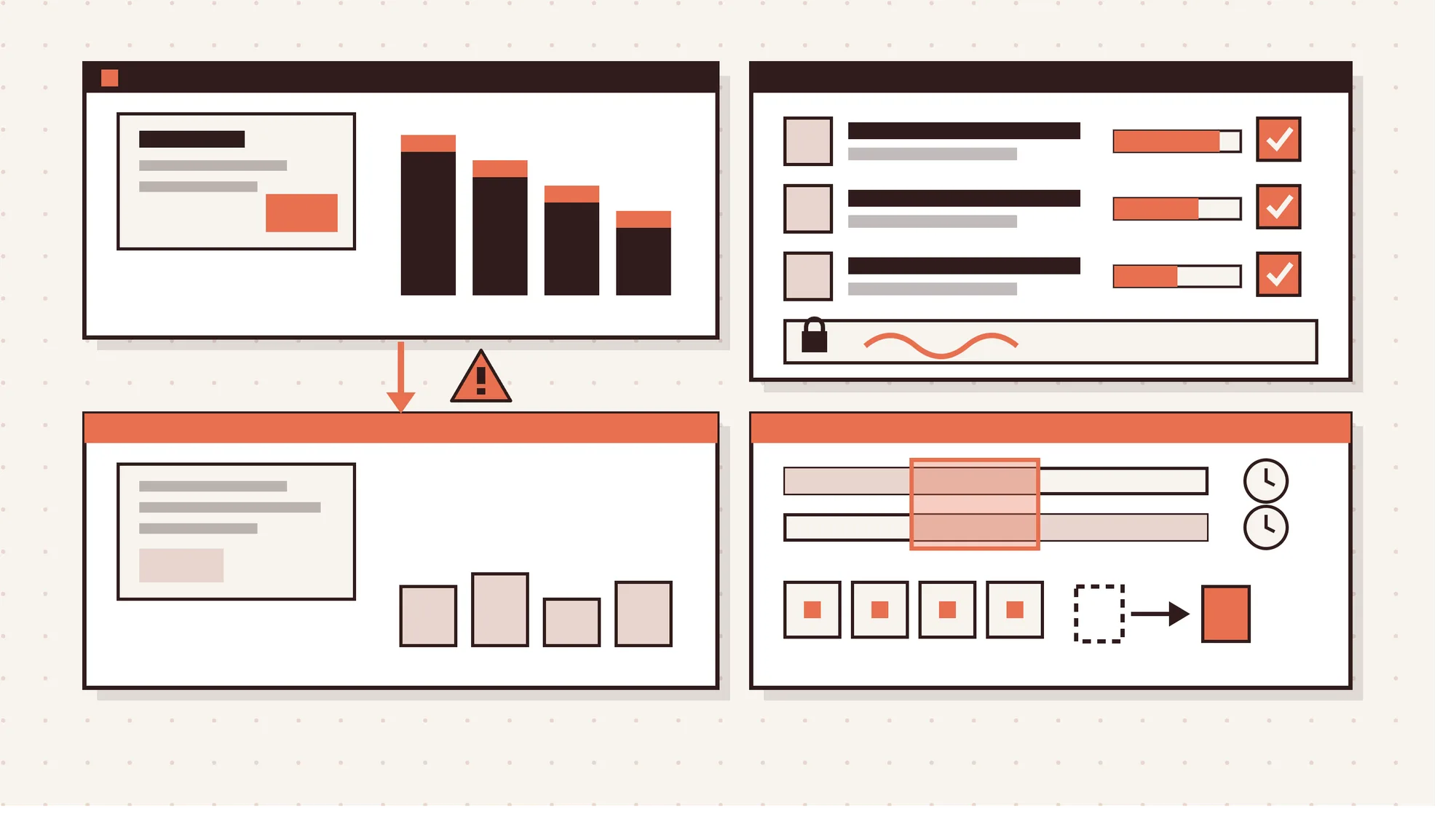
Questions about the team reveal who will actually design your product after you sign. They protect you from the classic swap where seniors pitch and juniors deliver.
4 questions to ask about the team that will do the work are given below.
- Who will design our product, and how much of their time will we get? Ask for names, roles and seniority. A strong answer gives you a dedicated designer or a clear seniority mix. It also states how much of their week you get.
- Is the team that pitches us the same team that does the work? Pitch teams are often senior, while delivery teams can be junior. A strong answer confirms that the people on the call stay on your project. Ask for the core team in writing.
- Do you use freelancers or subcontractors, and what happens if a key designer leaves? Subcontractors aren't a problem by themselves. Hidden subcontractors are. A strong answer explains who they use and how they vet them. It also covers a key-person departure without stalling your timeline.
- Who is our main point of contact, and how do you handle time zones and check-ins? Good communication is a schedule, not a promise. A strong answer names one point of contact and the hours of time zone overlap. It also sets a fixed check-in rhythm, like weekly reviews. A typical UI/UX agency team has a UX researcher, product designer, UI designer and creative director. If a role is missing, ask who covers it.
What Questions to Ask About the Design Process and Discovery?
Process questions show whether the agency researches the problem before it designs screens. Discovery, usability testing, revisions and developer handoff decide if a design works in real use.
4 questions to ask about the design process and discovery are given below.
- How do you run discovery and user research before design starts? Discovery is where the agency learns your users, market and goals. A strong answer describes a discovery workshop, stakeholder interviews and user research. It then shows how findings shape the wireframes.
- How do you test designs with real users before handoff? Usability testing catches problems before developers build them. NN/g's 2026 survey found interviewing and testing with users are the least AI-assisted tasks. These steps still need people, so a strong agency budgets for them.
- How many revision rounds are included, and how do you collect feedback? A clear number of revision rounds protects your budget and timeline. A strong answer explains the feedback tool, who signs off and how extra rounds work. Structured feedback beats endless email threads.
- How do your designers work with developers, and do you build a design system? Developer handoff decides how faithfully your design gets built. A strong answer covers shared Figma files, developer specs and check-ins with engineers. A design system with reusable components keeps the product consistent.
What Questions to Ask About AI Use in the Design Workflow?
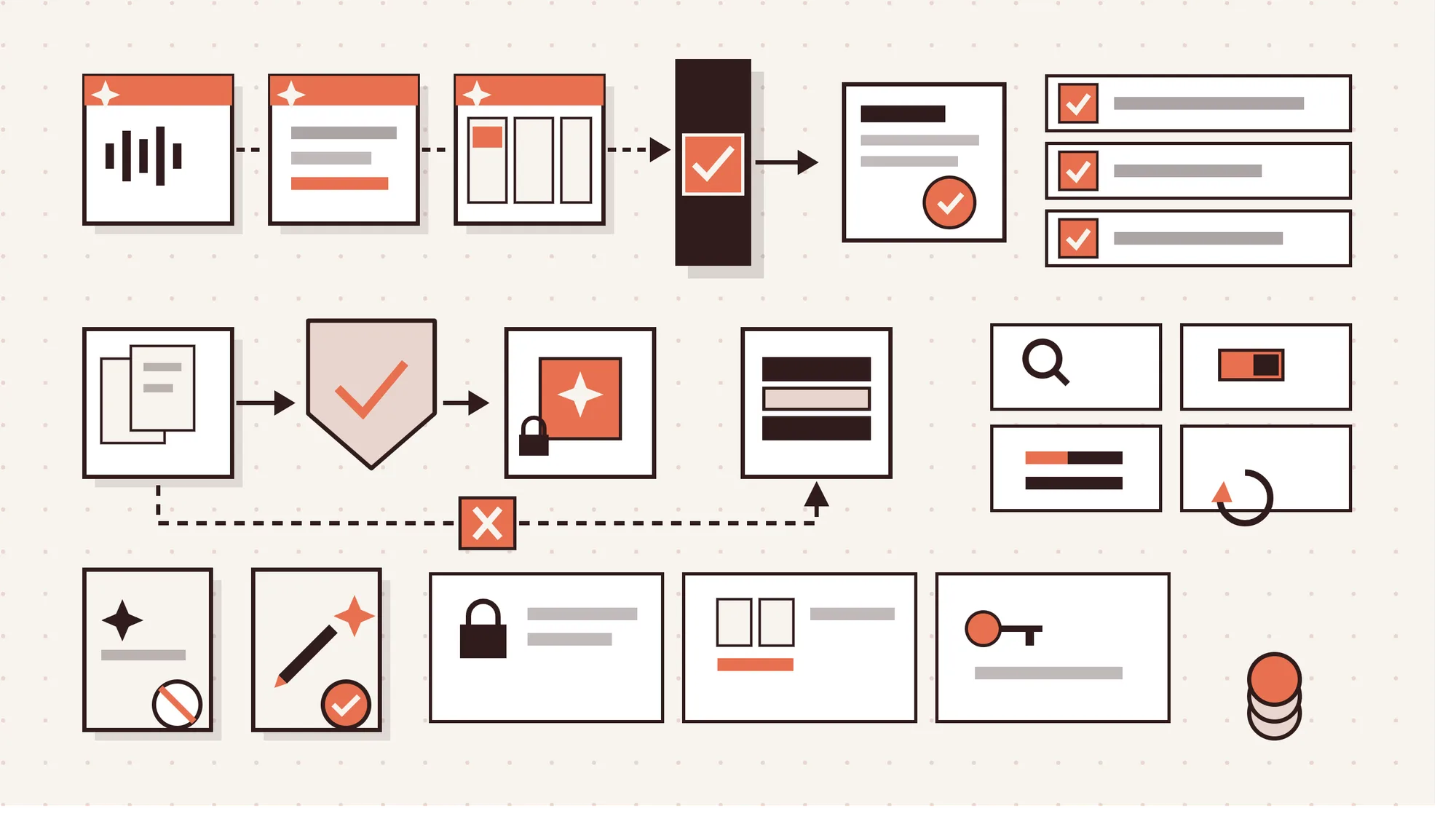
AI questions are now part of design agency due diligence because nearly every designer uses generative AI. The NN/g 2026 AI in UX survey found over 99% of UX practitioners have AI access at work. And 65% use AI features in design tools.
So AI governance matters as much as design skill. For a wider view, see this guide to AI for UX and product design.
4 questions to ask a design agency about AI are given below.
- Where do you use AI in your design workflow, and where do people make the final call? AI can speed up research synthesis, copy drafts and early layouts. A strong answer maps each AI step and names the human review point. Senior designers should make the final calls.
- Which AI tools do you use, and how do you keep our data out of model training? In the same NN/g survey, 50% of UX practitioners named data security or privacy as an AI barrier. A strong answer lists approved AI tools and their data settings. It also promises in writing that client data never trains models.
- How do you review AI-generated work for accuracy, bias and brand fit? In an IAB and Aymara survey, over 70% of marketers reported an AI-related incident. These included hallucinated, biased or off-brand output. A strong answer describes a review checklist, a named reviewer and brand safety rules.
- Have you designed AI-powered features, and how do you build user trust in them? AI features fail differently from normal features. NN/g lists transparency, user control, consistency and support when systems fail as trust basics. A strong answer shows each one in shipped work.
What Questions to Ask About Pricing, Scope and Timelines?
Pricing and scope questions prevent the budget surprises that sink many design projects. They clarify exclusions, change requests and payment milestones, so the total cost of ownership is clear upfront.
4 questions to ask about pricing, scope and timelines are given below.
- What pricing model do you use, and what does the fee include and exclude? Every model has trade-offs, so ask what each line item covers. A strong answer gives written inclusions and exclusions. Look for clear UI/UX design pricing that names deliverables, revision rounds and timelines up front.
- How do you handle scope changes and extra fees? Scope always shifts a little. A strong answer explains the change request process, how new work gets priced and who approves it. Treat "unlimited revisions" and "everything's included" as vague, and ask for written terms.
- What is the timeline for each phase, and what could make it slip? A single end date hides risk. A strong answer breaks the project into discovery, design and handoff phases with dates. It also names common delays, like slow feedback or missing content.
- How are payments tied to milestones, and what are the cancellation terms? Payment milestones should match delivered work, not calendar dates. A strong answer links each payment to a clear deliverable. It also explains cancellation terms, including any kill fee. The four common pricing models are fixed fee, time and materials, monthly retainer and subscription. Fixed fee suits a defined scope, and time and materials suits changing work. Retainers and subscriptions suit ongoing support.
What Questions to Ask About Ownership, Handoff and AI Copyright?
Ownership questions decide what you keep when the project ends. They cover IP transfer, source files, AI-generated material and account ownership. Get them right and you never start from zero.
3 questions to ask about ownership and handoff are given below.
- Who owns the designs, source files and IP once we pay? Ownership should transfer to you on final payment. A strong answer confirms full IP transfer in the contract, including editable source files. Watch for clauses that hold files back until extra fees clear.
- Which parts of the work are AI-generated, and how does that affect our copyright? The U.S. Copyright Office's Part 2 report from January 29, 2025 says material generated solely by AI isn't copyrightable. Prompts alone don't make you the author. AI-assisted work with enough human authorship can still be protected.
- What exactly is included in the final handoff? A vague handoff leaves you stuck later. A strong answer lists editable Figma files, the design system and developer specs. It also covers font and asset licenses, plus accounts and domains in your name. Copyright rules for AI-generated material are still developing. Have a lawyer review the IP terms before you sign.
What Questions to Ask About Results and Post-Launch Support?
Results questions show whether the agency stays accountable after launch. They test how success gets measured with post-launch analytics, and what support looks like after the first release.
2 questions to ask about results and post-launch support are given below.
- How will you measure the success of the design after launch? Success needs a number agreed before design starts. A strong answer names KPIs like conversion rate, activation or retention. It also explains how analytics and usability insights shape the next iteration.
- What support do you offer after handoff, and can we keep the team on a retainer? Products keep changing after launch. A strong answer describes a support window for fixes and questions, plus a retainer option. Keeping the same designers saves you onboarding a new team later.
How to Evaluate a Design Agency's Answers?
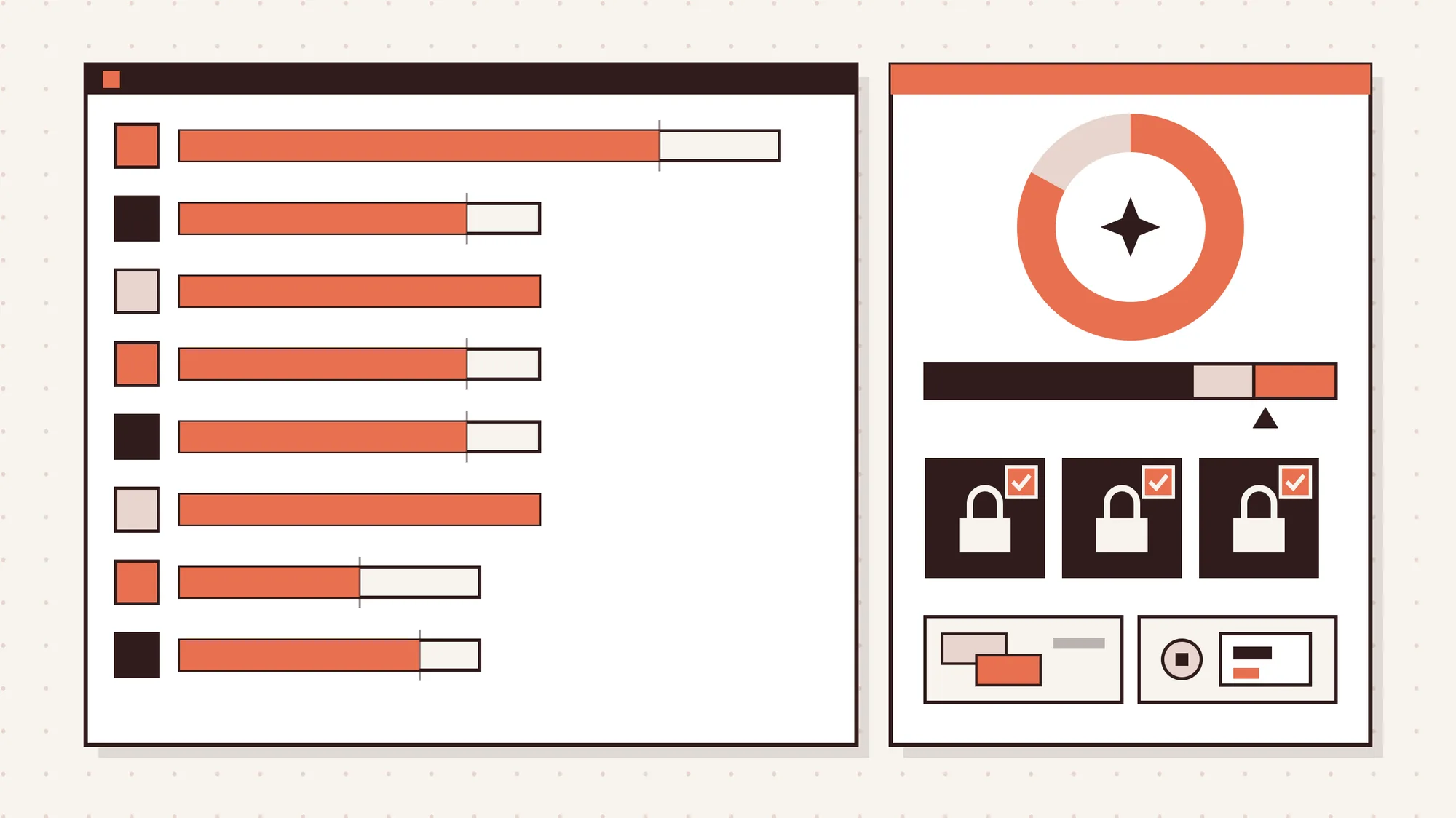
To evaluate a design agency's answers, score them the same way for every agency. A weighted scorecard turns sales calls into comparable numbers. It rewards specific, written answers over charm.
5 steps to evaluate a design agency's answers are outlined below.
- Ask every shortlisted agency the same questions. Use the same 25 questions, in the same order, for every agency. Ask for key answers in writing to compare them side by side.
- Score each area from 1 to 5. Give 1 for vague or evasive answers and 5 for specific answers backed by examples. Score right after each call.
- Weight the areas by your project priorities. Not every area matters equally. A fintech product might weight security higher. A rebrand might weight creative quality higher.
- Treat IP, data security and AI governance as pass or fail. These are non-negotiables. A high total can't rescue an agency that keeps your source files or trains models on your data.
- Confirm the top scorer with references or a paid pilot. Call references to confirm what you heard. Then run a small paid pilot, such as one user flow, before you commit. A sample weighted scorecard is shown in the table below.
| Area | Weight | Score (1 to 5) |
|---|---|---|
| Creative quality and brand consistency | 20 | 4 |
| Team and expertise | 12 | 4 |
| Process and collaboration | 12 | 5 |
| AI readiness and governance | 12 | 4 |
| Pricing and commercial model | 12 | 4 |
| Security, compliance and ownership | 12 | 5 |
| Results and ROI | 10 | 3 |
| Capabilities and services | 10 | 4 |
To get a weighted score, divide each score by 5 and multiply it by the weight. The sample above totals 83 out of 100.
A score of 80 to 100 marks a strong candidate. A score of 65 to 79 needs a paid pilot first, and below 65 is a weak fit.
What Are the Red Flags When Hiring a Design Agency?
The biggest red flags are evasive answers, missing results and unclear ownership terms. Spot them before you sign, because they rarely improve once the project starts.
8 red flags to watch for when hiring a design agency are given below.
- Vague answers about who does the work: The agency can't name your designers or keeps a rotating team.
- A portfolio with no results attached: Polished screens with no results suggest design without business thinking.
- Skipping discovery and user research: Jumping straight to UI means the agency is guessing about your users.
- "Unlimited revisions" or "everything's included": Agreeing to every request without written limits usually hides costs later.
- No clear account of AI use or human review: The agency can't explain its AI tools or review steps.
- The agency keeps source files, domains or accounts: You should own every file and account you paid for.
- No termination terms or a large kill fee: Without an offboarding process, you're stuck in a failing partnership.
- Reluctance to share references: Confident agencies connect you with past clients without being chased.
Is One Weak Answer Enough to Rule Out a Design Agency?
No, one weak answer is not enough to rule out a design agency because everyone has blind spots. Ask follow-up questions first, or request the answer in writing. A pattern of weak answers in one area is the real warning sign.
The exception is IP ownership, data security and AI governance. A weak answer on any of these can disqualify an agency on its own.
What Questions Should You Ask a Design Agency's References?
Reference calls confirm whether the agency delivered what it promised. Keep each call short and focused on facts.
5 questions to ask a design agency's references are given below.
- Did the project finish on time and on budget? If not, ask what caused the delay.
- Did the people who pitched the work also do it? Team continuity is a strong sign of honesty.
- How did the agency handle disagreements? Good partners push back with reasons and still respect your final call.
- What would you do differently with this agency? The answer often reveals small, useful warnings.
- Would you hire them again? A quick, clear yes is the strongest signal you'll get. Also find one reference the agency didn't supply. Clutch reviews and a quick LinkedIn search for past clients work well for this.
How Much Does It Cost to Hire a UI/UX Design Agency?
Hiring a UI/UX design agency typically costs $10,000 to $49,999 per project. Clutch's UI/UX agency pricing data shows most agencies charge $25 to $49 per hour.
US, Canadian and Australian agencies average $100 to $149 per hour. UK, Polish and Spanish agencies average $50 to $99.
Five factors change the final price: scope of work, agency location, product complexity, compliance requirements and AI integration. A small MVP and a regulated enterprise platform can sit far apart on the same agency's rate card. This breakdown of UI/UX design cost explains each factor in more detail.
Average UI/UX agency hourly rates by country are shown in the table below.
| Country | Average Hourly Rate (USD) |
|---|---|
| United States | $100 to $149 |
| Canada | $100 to $149 |
| Australia | $100 to $149 |
| United Kingdom | $50 to $99 |
| Poland | $50 to $99 |
| Spain | $50 to $99 |
| India | $25 to $49 |
| Philippines | $25 to $49 |
| Ukraine | $25 to $49 |
| Mexico | $25 to $49 |
Does AI Make Hiring a Design Agency Cheaper?
No, AI does not automatically make hiring a design agency cheaper because faster tasks don't mean faster projects. NN/g's 2026 survey found AI speeds up individual tasks, but higher expectations and reviewing AI output often absorb the time saved. Dribbble's 2026 cost guide adds that AI integration in your product can raise the design cost.
Is Hiring a UI/UX Design Agency Worth It?
Yes, hiring a UI/UX design agency is worth it when design affects revenue, retention or user trust. Figma's 2026 AI report surveyed designers, developers and product managers. 90% said design is at least as important as before AI.
McKinsey's "The Business Value of Design" study points the same way. Top-quartile design performers outgrew industry peers on revenue and shareholder returns.
What Are the Pros and Cons of Hiring a UI/UX Design Agency?
The main pros of a UI/UX design agency are a full team and a proven process. The main cons are a higher rate and less day-to-day control. Weigh both against your scope and budget.
The pros and cons of hiring a UI/UX design agency are given in the table below.
| Pros | Cons |
|---|---|
| A full design team with research, UX, UI and creative direction | A higher hourly rate than most freelance designers |
| A proven process covering research, prototyping, testing and developer collaboration | Internal management time adds to the total cost |
| Flexible capacity that can scale up or down with your roadmap | Risk of junior staff taking over after the pitch |
| No hiring overhead, salaries or long-term headcount commitments | Scope and budget creep without written terms |
| A faster start on larger scopes that need several skills at once | Less day-to-day control over priorities and schedules |
What Questions to Ask Different Types of Design Agencies?
The 25 core questions apply to every design agency, but each agency type needs a few extra questions. Below are the extra questions for three common project types: branding, web design and white label work.
What Questions to Ask a Branding Agency?
A branding agency needs extra questions about research and the scope of the identity it delivers. If you're still building a shortlist, this list of brand identity design agencies is a useful starting point.
3 extra questions to ask a branding agency are given below.
- What market research do you do before designing the brand identity?
- How many identity directions or logo concepts will you present in the first round?
- What do the brand guidelines include at handoff, such as typography, color palette and usage rules?
What Questions to Ask a Web Design Agency?
A web design agency needs extra questions about the build platform, accounts and site performance. These matter whether you hire a specialist or a team offering full website UI/UX design and development.
4 extra questions to ask a web design agency are given below.
- Which CMS or site builder will you use, such as Webflow, Framer or WordPress, and why?
- Who will own the domain, hosting and analytics accounts after launch?
- How do you handle SEO basics, responsive design and page speed?
- How do you design for accessibility, and which standard do you test against?
What Questions to Ask a White Label Design Agency?
A white label design agency needs extra questions about confidentiality, branding and capacity. A white label partner designs work you deliver to clients under your own brand. The partner stays behind the scenes.
4 extra questions to ask a white label design agency are given below.
- Will you sign an NDA and a non-solicitation clause covering our clients?
- Will every file, prototype and presentation be delivered without your branding?
- Will you ever contact our clients directly without our approval?
- How fast can you add capacity when our project volume grows? This is how Panze works as a white label design agency for agencies and studios. Senior designers lead every project, files arrive unbranded and your clients only ever see your team.
How Does a Design Agency Compare With Other Hiring Options?
A design agency is one of three hiring options, next to a freelance designer and an in-house team. The right choice depends on your scope, your budget and how long the design work will continue.
What Is the Difference Between a Design Agency and a Freelance Designer?
The key difference is that a freelancer is one designer, while an agency gives you a full team. Freelancers on Upwork average $20 to $40 per hour and suit small, well-defined projects. Agencies average $25 to $49 per hour on Clutch, and they suit larger scopes with backup coverage.
See this comparison of hiring an agency vs hiring a freelance designer for a closer look.
What Is the Difference Between a Design Agency and an In-House Design Team?
The key difference is commitment. An in-house team means salaries, benefits, hiring time and ramp-up. It suits companies with a high budget and continuous design needs.
An agency suits projects that need a full team quickly, without hiring costs. This breakdown of hiring an agency vs building an in-house team covers the trade-offs in more depth.
Frequently Asked Questions
How Many Questions Should You Ask a Design Agency on the First Call?
Ask 8 to 10 key questions on the first call. Focus on who does the work, the process, AI use and the pricing model. Save detailed questions on IP, handoff and cancellation for the proposal review or a follow-up meeting.
Should You Ask a Design Agency About Price on the First Call?
Yes, you should ask a design agency about price on the first call because it confirms budget fit. Ask for a price range and the pricing model, not a final quote. A serious agency will give a ballpark estimate and explain that the final quote comes after discovery.
What Is the Most Important Question to Ask a Design Agency?
The most important question is who will actually design your product. That answer shapes quality, speed and communication more than any portfolio piece. Ask for names, roles and seniority, and confirm in writing that the pitch team stays on.
How Do You Know If a Design Agency Is Good?
A good design agency gives specific answers backed by results, process and references. It can walk you through a case study with real KPIs. It explains discovery and testing before it shows screens, and its past clients say they'd hire it again.
Should You Ask a Design Agency About Security and Compliance?
Yes, you should ask a design agency about security and compliance before it sees user data. It matters most in fintech, healthtech and other regulated products. Ask how the team handles data access, NDAs and approved AI tools, and get the rules in writing.
Final Thoughts
The questions to ask a design agency all point to one test: specific, written answers. The right partner explains who does the work, how AI is used, the cost and what you own. Score every answer, then look at real design work and case studies before you decide.
If you're comparing partners now, put these 25 questions to Panze, and we'll answer each in writing. Senior designers lead every project, with fixed-price plans and monthly retainers. Talk to the Panze team to start the conversation.